History and Events.

Discover the history of Lightworks, from its beginnings in Sheffield to more than thirty years of professional editing. Explore the films, milestones and changes that have shaped the editor and its place in modern filmmaking.

Built around the
way editors work.

Lightworks has evolved with the technology, but its focus has remained the same: giving editors the tools and freedom to shape great stories.

A history shaped by editors.

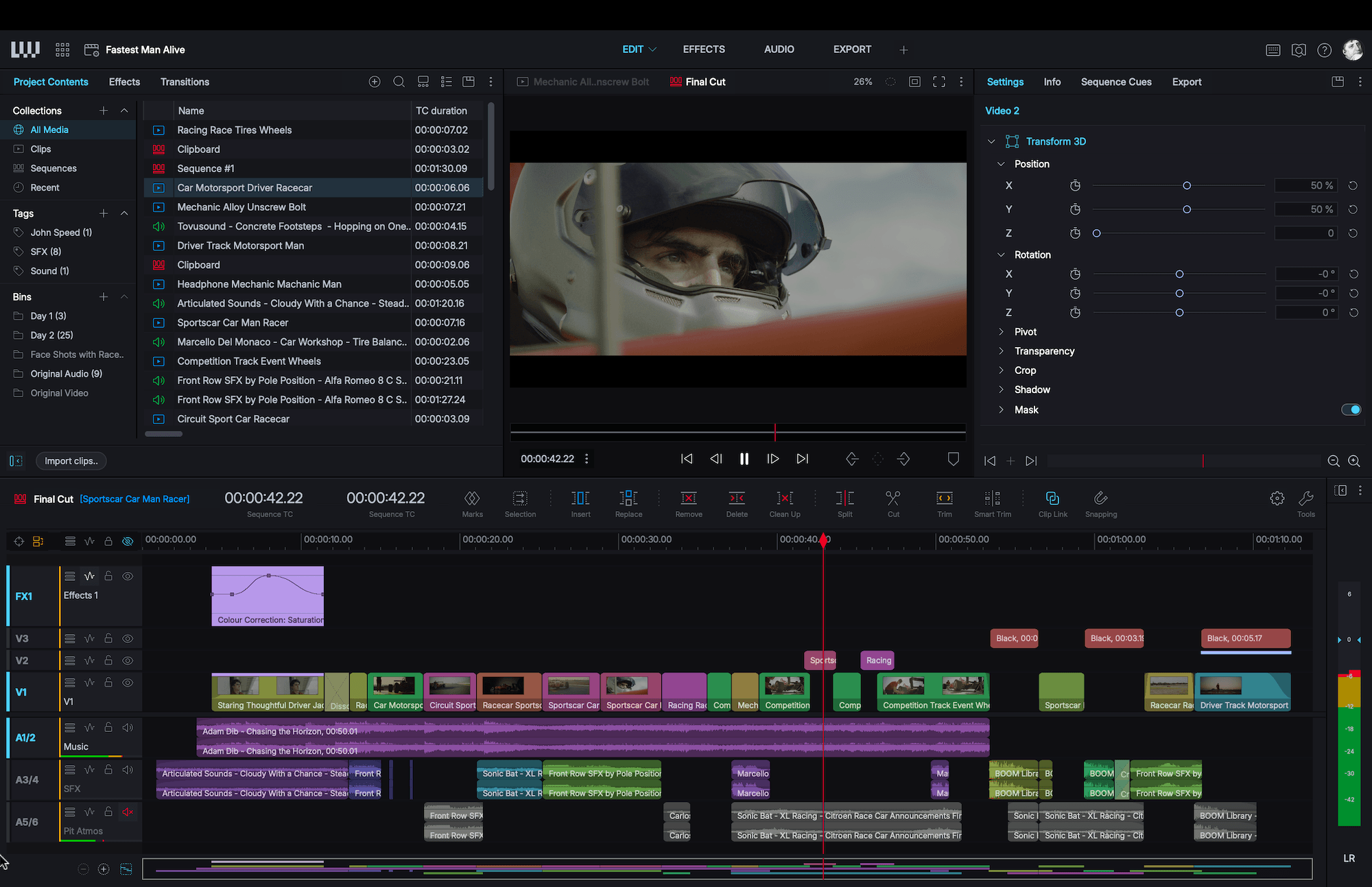
Lightworks was created at a time when professional film editing was moving from physical film and linear video towards a new digital workflow. From its beginnings in Sheffield, England, the software was designed around the way professional editors think and work, giving them the freedom to experiment, refine and reshape a story without being constrained by the original footage.


That approach quickly found an audience among professional filmmakers. Lightworks became part of the editing process on major Hollywood productions, including Pulp Fiction, The King's Speech, The Wolf of Wall Street and The Irishman. For the editors working on these productions, Lightworks was more than a piece of technology. It was a creative tool that needed to keep pace with demanding productions, large amounts of footage and the pressure of turning hours of material into a finished story.


Over the years, the technology behind filmmaking has changed dramatically. Cameras have moved from film to digital, resolutions have increased, formats have multiplied and productions have become increasingly distributed. Through those changes, the fundamentals of editing have remained remarkably consistent: reviewing material, finding the right moments, building a sequence and refining it until the story works.

From the cutting room to every creator.

Lightworks has continued to evolve alongside those changes. The editor expanded beyond its original professional audience, becoming available across Windows, macOS and Linux and introducing workflows that make professional editing accessible to a much broader community of filmmakers and creators.

Today, Lightworks is used for far more than feature films. Creators use it to produce YouTube videos, documentaries, social content, short films, music videos and commercial projects. The needs may be different, but the creative process remains the same: bring your footage together, find the story within it and turn your ideas into something people can watch.

That balance between professional heritage and accessibility remains central to Lightworks. More than thirty years after the first system was demonstrated, the editor continues to develop for a new generation while retaining the principles that shaped it from the beginning.

The tools may have changed. The purpose has not.